
Know what I owe
One accurate total across every bill.
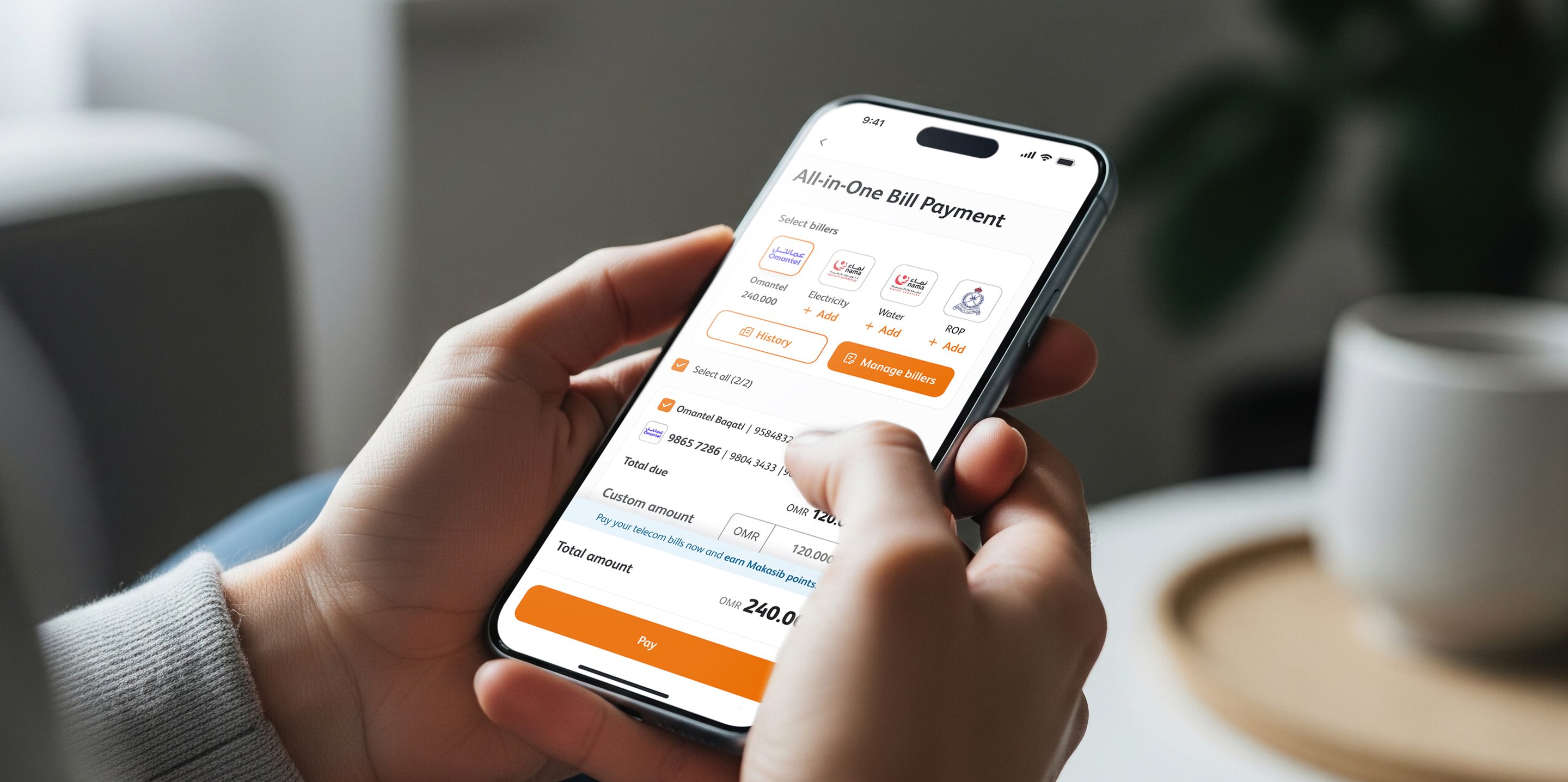
Omantel | CEP Super App | Act 2
The services existed. The adoption didn’t. Electricity, water and ROP payments were already available inside the app. Very few customers used them.
All-in-one bill payment rarely fails because of vision. It fails because complexity accumulates quietly over time, and no single team owns the full picture.
This story starts where Act 1 ended. The Telco Revamp established a trust-first payment model, a common interaction pattern and a single place to manage bills. Act 2 asked a different question: Could the same model scale across every bill a user manages?
Customers weren’t paying one bill.
They were managing multiple bills across multiple systems.
Each service had a different path, different payment flow, and different source of truth.
The result wasn’t complexity in the product. It was complexity in the customer’s head.
We weren’t solving a payment problem.
We were solving a mental model problem.
The first question wasn’t structural. It was experiential.
That question didn’t give us the answer. But it gave us the right filter for every decision that followed.
Bill payment is one of the few moments where people slow down and worry about getting it wrong. In Oman, it’s rarely just personal.
People routinely manage payments for family members, multiple lines and sometimes multiple households. The challenge wasn’t awareness.
Omantel already reminded people when bills were due. The challenge was the effort required to act on that awareness.
Behind hundreds of interactions and dozens of observed behaviours, four needs appeared again and again.
One accurate total across every bill.

Decide what, when and how to pay.

Finish quickly and feel confident it’s done.

Know what’s due, what’s paid and what needs attention.
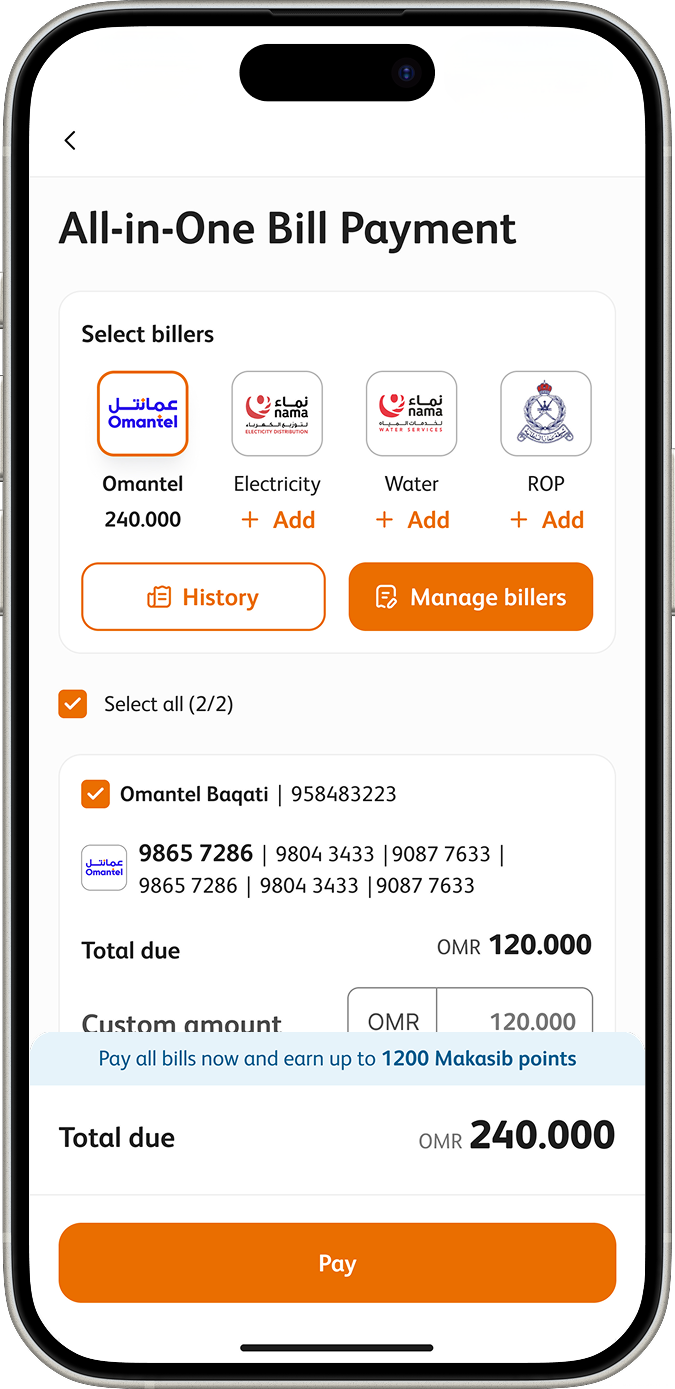
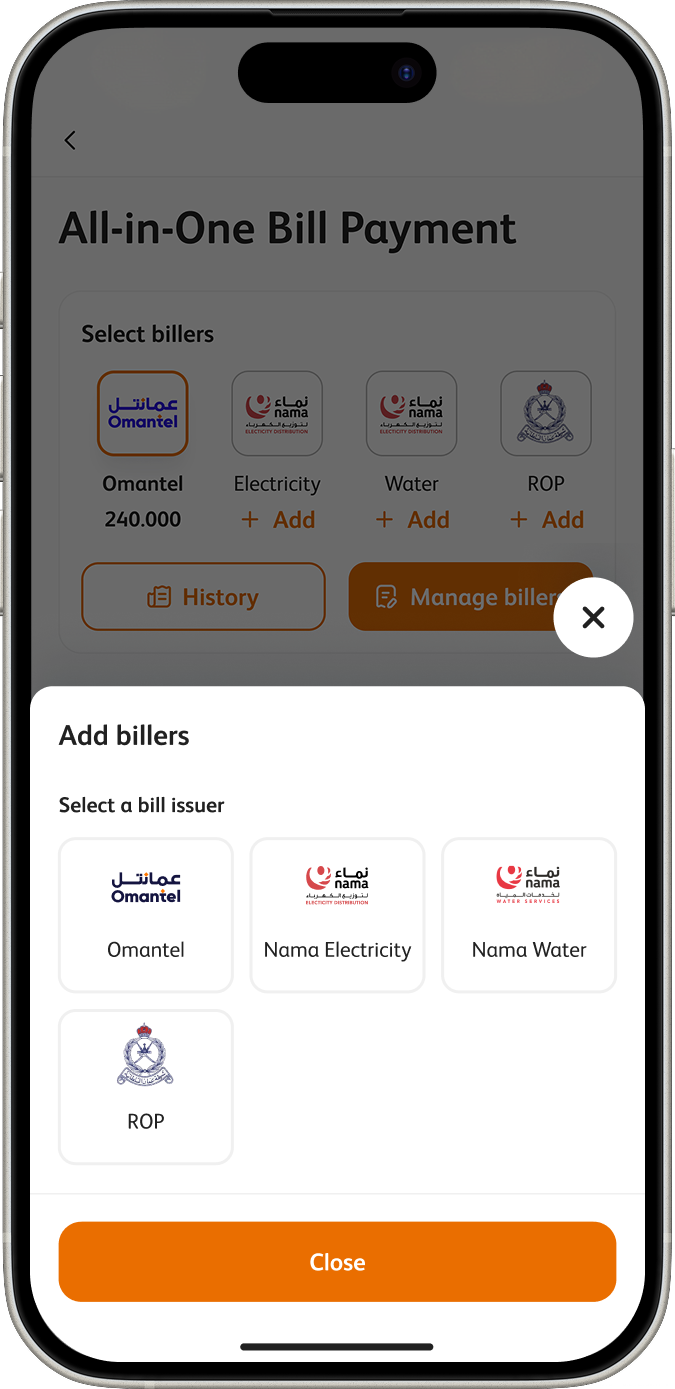
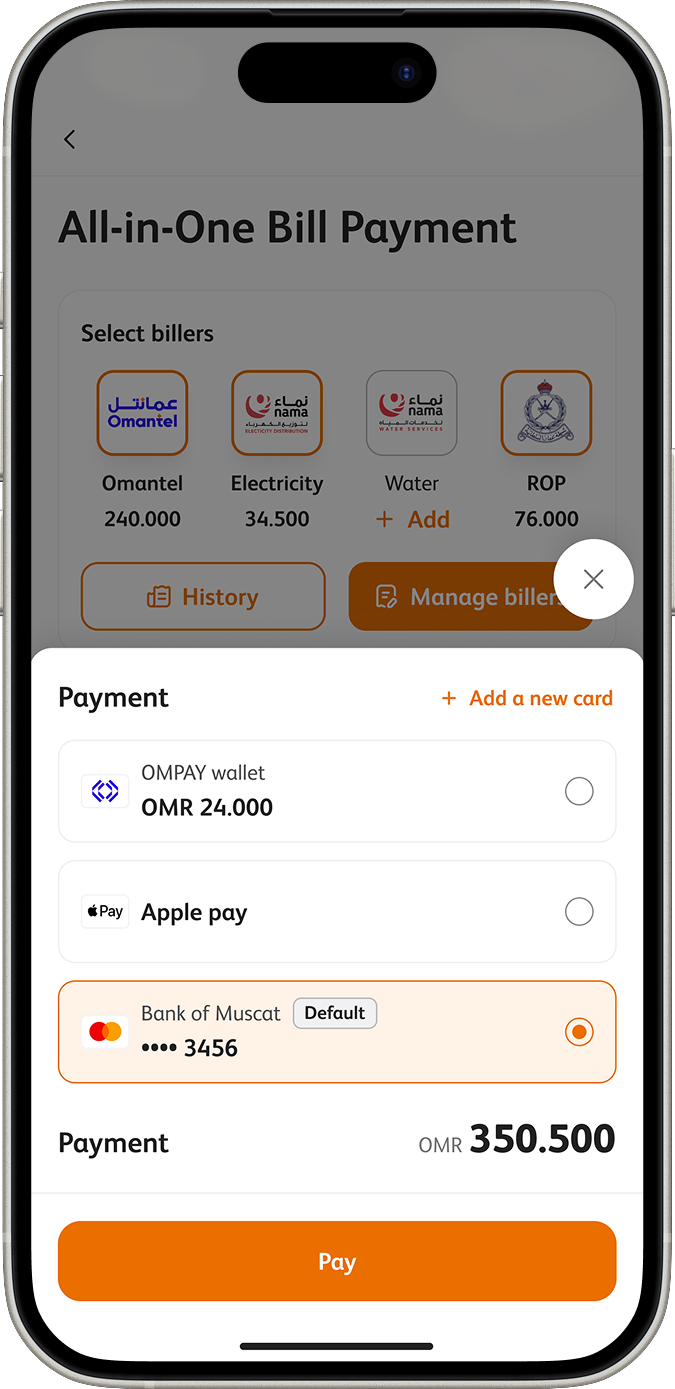
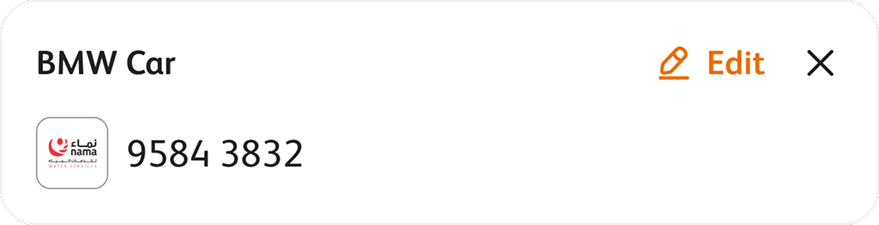
People shouldn’t have to understand categories, bill types or provider relationships. They should know exactly what they owe, what they’re paying, and whether it worked. Everything else is the platform’s problem.
One view.
One total.
One decision.
Customers don’t think in services.
They think in obligations.
By bringing every bill into one place, the experience stopped asking customers to manage complexity that wasn’t theirs to carry.
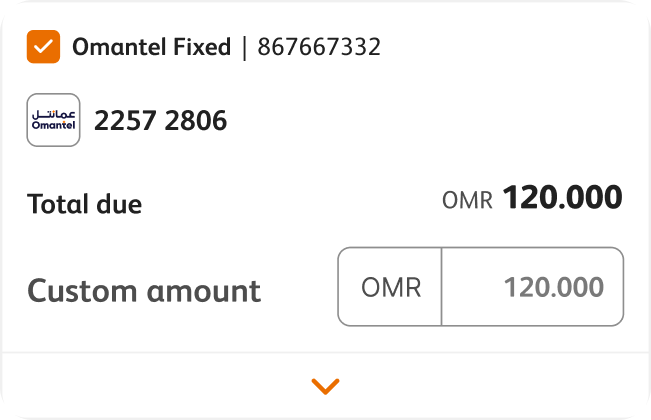
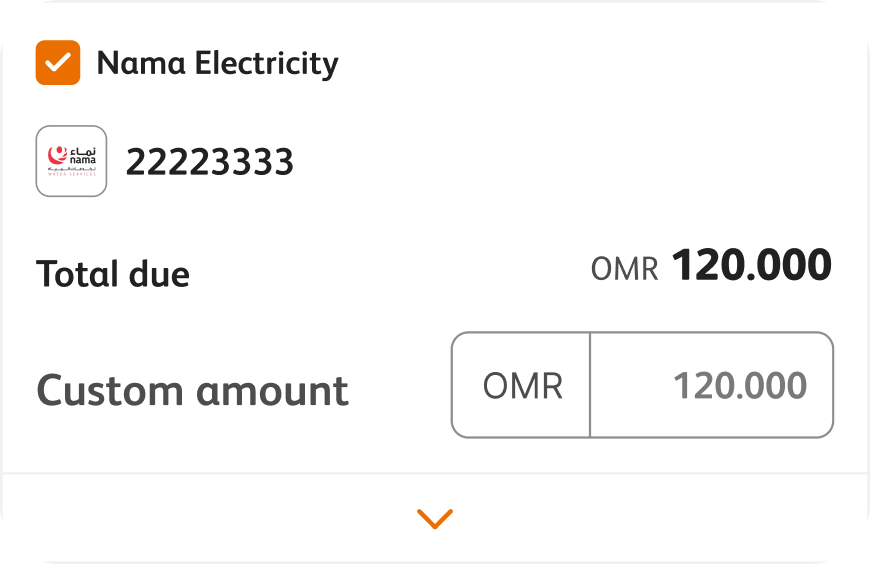
People don’t always pay everything at once.
Some pay what is urgent. Some pay what they can afford. Some split payments between salary cycles.
The experience needed to support real-life financial behaviour without turning bill payment into a puzzle.
Customers could decide what to pay.
The system handled the complexity behind the scenes.
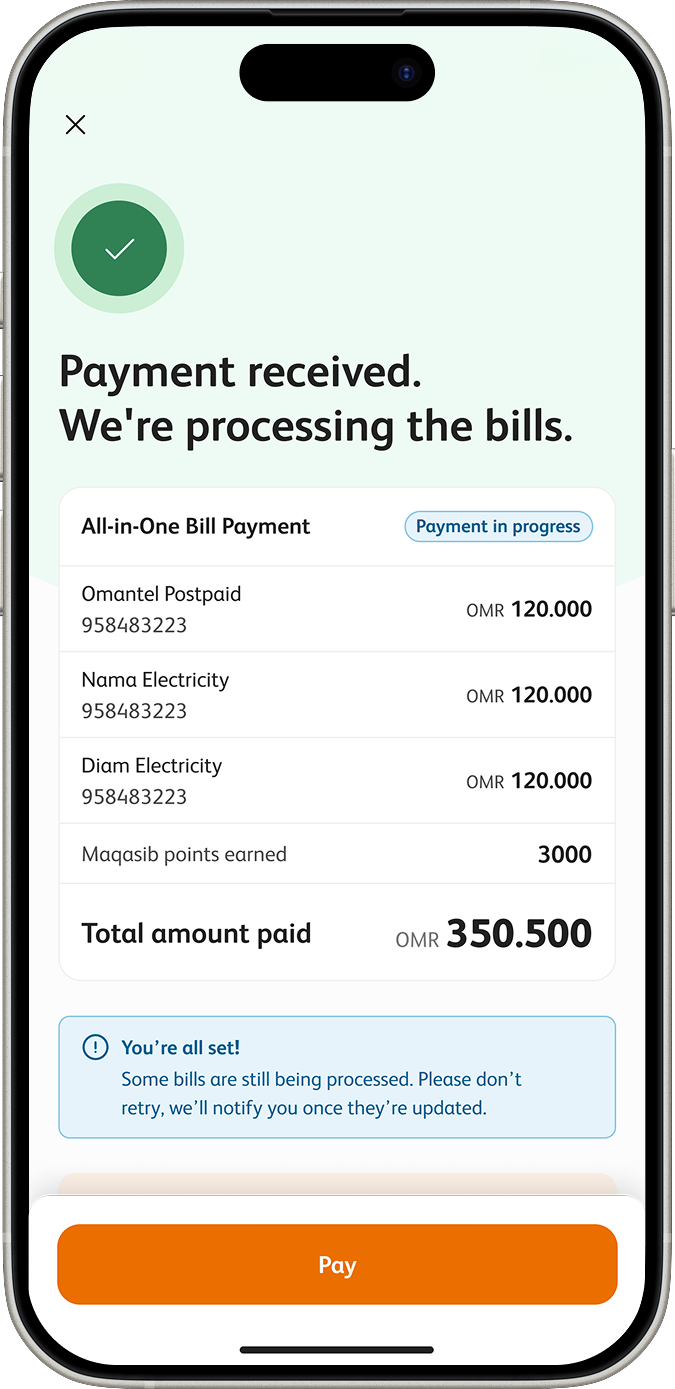
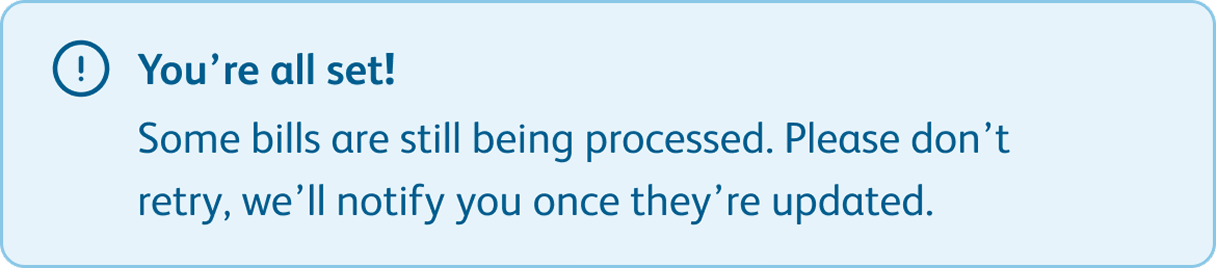
A payment isn’t complete when the system finishes processing. It’s complete when the person feels confident it’s done. Every bill receives its own status:
– Paid
– Processing
– Failed
No guessing.
No second-guessing.
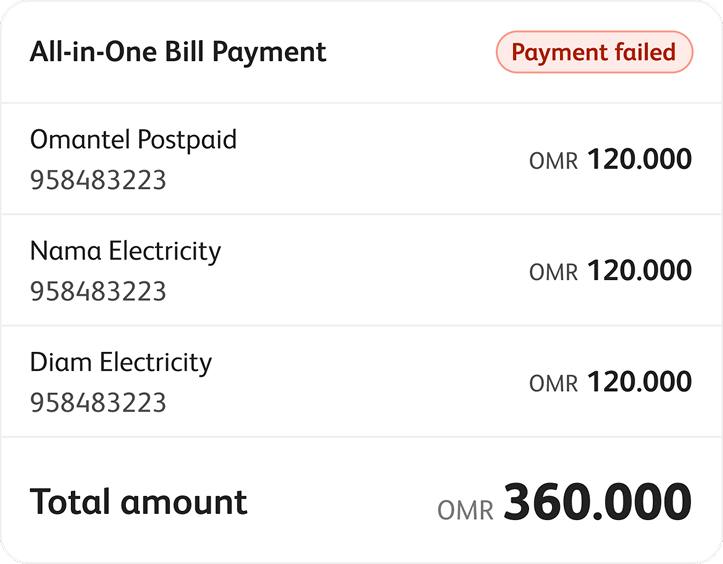
Every provider had been designed independently.
Different rules. Different workflows. Different technical constraints. Different expectations. Each one made sense on its own.
None of them had been designed to work together.
The challenge wasn’t exposing that complexity.
The challenge was absorbing it on behalf of customers.
Every new bill type increased complexity for the platform.
The design challenge was ensuring complexity never increased for the customer.
Most of the work sat between teams, not inside a file. Four provider organisations, one customer outcome.
Adding new services was never the challenge.
The challenge was expanding the ecosystem without forcing customers to learn a new experience every time.
The foundation we created allows new bill types, partners, and future services to plug into the same mental model customers already understand.
Customers gain simplicity.
The business gains flexibility.
The platform can continue to grow without increasing cognitive load.
The outcome was bigger than bill payment. We established a repeatable experience model for future growth.